


When you enroll in a health insurance plan — whether through an employer, the ACA marketplace, or Medicare Advantage — one of the first decisions you face is plan type. HMO or PPO comes up in nearly every health insurance conversation, and the choice affects not just your monthly premium but how you access care, who you can see, and what happens if you need a specialist or go outside your network.
Despite how frequently these terms appear, the actual structural differences between them are rarely explained clearly. This guide does that.
The Core Structural Difference
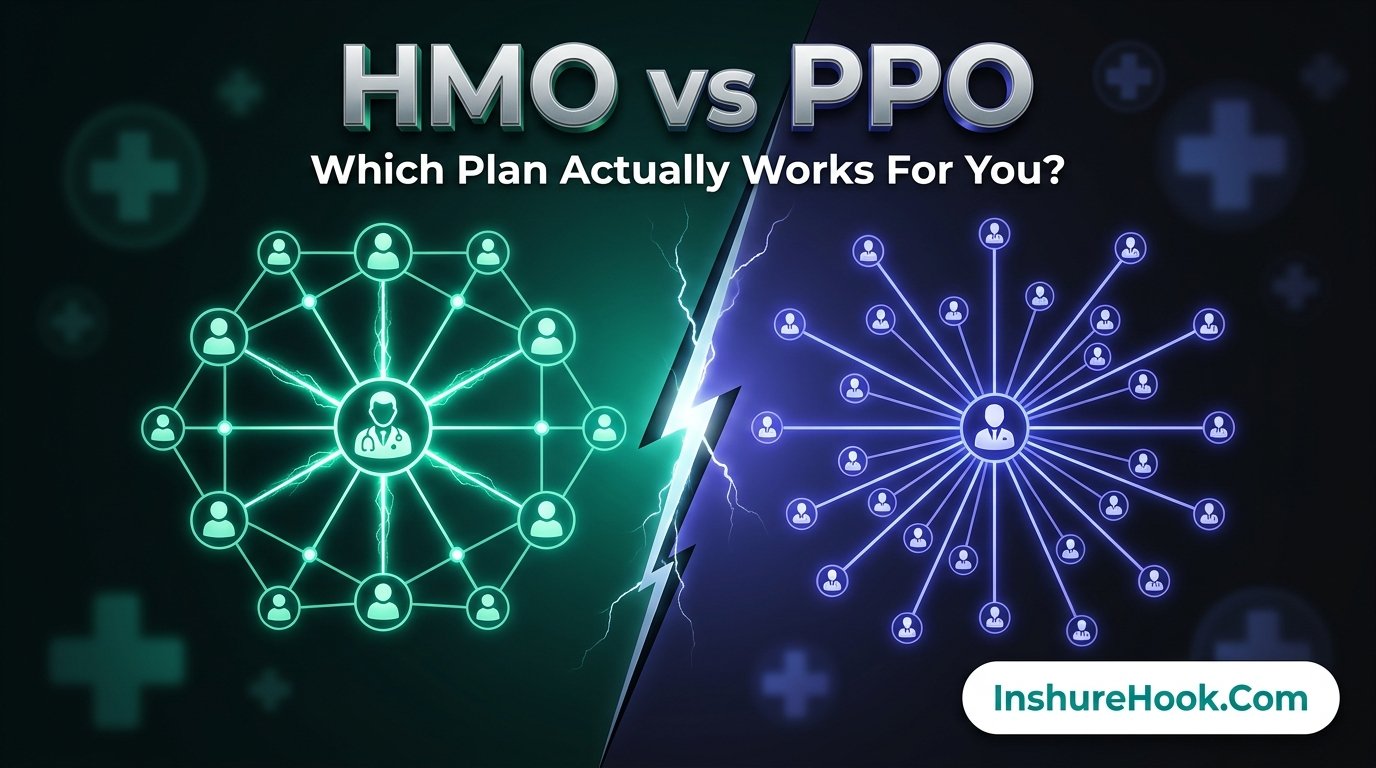
An HMO (Health Maintenance Organization) is built around a defined network of providers. You receive care within that network. You choose a primary care physician who manages your care and coordinates referrals to specialists. Go outside the network for non-emergency care, and the plan generally pays nothing — you absorb the full cost.
A PPO (Preferred Provider Organization) gives you more flexibility. You can see any provider — in-network or out-of-network — without a referral. In-network care costs significantly less, but out-of-network care is covered, just at a higher cost-sharing level. You do not need a gatekeeper to access specialists.
That structural difference — network restriction versus network flexibility — is what drives every other distinction between the two plan types, including cost.
How an HMO Works
The Primary Care Physician Requirement
In an HMO, you select a primary care physician (PCP) from the plan’s network when you enroll. This doctor becomes your point of contact for all non-emergency care. Routine visits, sick visits, prescription management, chronic disease management — these all go through your PCP.
When you need specialty care — a cardiologist, an orthopedist, a dermatologist — your PCP provides a referral. That referral directs you to an in-network specialist covered under the plan. Seeing a specialist without a referral, or seeing one outside the network, generally means the plan does not pay.

Network Boundaries
HMO networks tend to be geographically limited — designed around a specific region or area. If you travel frequently, live part of the year in a different location, or have family members who receive care in a different region, an HMO’s geographic limitations can create real access problems.
Emergency care is the exception. HMOs cover emergency care regardless of network status — federal law requires it. If you have a medical emergency while traveling, you receive covered emergency treatment. Follow-up care after stabilization, however, typically needs to return to the in-network system.
Cost Structure
HMOs are generally less expensive than PPOs. The restricted network allows insurers to negotiate lower rates with a smaller group of providers, control care coordination more tightly, and reduce administrative overhead. These savings are passed through as lower premiums and typically lower cost-sharing.
Most HMO visits involve a flat copay — $20 to $40 for a primary care visit, $40 to $70 for a specialist — rather than meeting a deductible first. Some HMOs have very low or no deductible at all for in-network care.
How a PPO Works
No Referral Required
The defining feature of a PPO is that you can see any provider — primary care, specialist, urgent care — without a referral and without going through a gatekeeper. You decide you need a dermatologist, you call and make an appointment. You want a second opinion from a specialist at a different health system. You go. The plan responds based on whether that provider is in-network or out-of-network.
In-Network vs. Out-of-Network Cost-Sharing
PPOs maintain a preferred network — providers who have contracted with the insurer at negotiated rates. Seeing in-network providers produces the plan’s standard cost-sharing: your deductible, then coinsurance, up to the out-of-pocket maximum.
Out-of-network care is covered — this is the key distinction from an HMO — but at higher cost. A separate out-of-network deductible typically applies. Coinsurance is higher. Balance billing is possible. And some PPOs cap out-of-network cost-sharing at a separate, higher maximum.
The in-network vs. out-of-network guide explains this cost-sharing structure in detail, including how the No Surprises Act limits balance billing in specific situations.
Cost Structure
PPO premiums are higher than HMO premiums for comparable coverage. The insurer is accepting a broader liability — any provider, in or out of network — and pricing accordingly. Deductibles tend to be higher than HMO deductibles, and cost-sharing after the deductible is typically a percentage (coinsurance) rather than a flat copay.
For people who rarely need specialist care, never go out of network, and primarily use their plan for routine visits, a PPO’s higher premium may not produce commensurate value. For people who need specific specialists, travel frequently, or have complex care needs spanning multiple health systems, the flexibility justifies the cost.
Side-by-Side Comparison
| Feature | HMO | PPO |
|---|---|---|
| Primary care physician required | Yes | No |
| Referrals needed for specialists | Yes | No |
| Out-of-network coverage | Emergency only | Yes, at higher cost |
| Monthly premium | Lower | Higher |
| Deductible | Lower or none | Higher |
| Copays vs. coinsurance | Usually flat copays | Usually coinsurance |
| Network size | Smaller, regional | Larger, often national |
| Care coordination | Through PCP | Self-directed |
| Best for | Predictable, routine care | Flexibility, specialist access |

EPO and POS Plans: The Middle Ground
HMO and PPO are the most common plan types, but two others appear regularly and are worth understanding.
EPO (Exclusive Provider Organization) combines elements of both. Like a PPO, it generally does not require referrals for specialists. Like an HMO, it does not cover out-of-network care for non-emergencies. EPO premiums are typically lower than PPOs because the network is restricted, but you get the convenience of no referral requirement. EPOs are a practical choice for people who want referral-free specialist access but are willing to stay within a defined network.
POS (Point of Service) plan requires a primary care physician and referrals like an HMO, but allows out-of-network care at higher cost like a PPO. It is a hybrid — more flexibility than a pure HMO, more structure than a PPO. POS plans are less common in the current market but appear in some employer-sponsored benefit packages.
| Plan Type | Referrals Required | Out-of-Network Covered |
|---|---|---|
| HMO | Yes | Emergency only |
| PPO | No | Yes |
| EPO | No | Emergency only |
| POS | Yes | Yes, at higher cost |
How to Choose Between HMO and PPO
There is no universally correct answer. The right plan type depends on your healthcare habits, provider relationships, and financial priorities.
An HMO tends to make more sense when:
You have a primary care doctor you trust within the plan’s network and are comfortable working through them for specialist referrals. Your healthcare needs are largely routine — preventive care, occasional illness, prescription management. You want lower premiums and more predictable per-visit costs. You live and receive most of your care in one geographic area. Budget is a meaningful constraint and you are willing to accept network restrictions in exchange for lower cost.
A PPO tends to make more sense when:
You have established relationships with specialists you want to continue seeing regardless of network status. You manage a complex or chronic condition that involves multiple specialists or health systems. You travel frequently or divide time between two locations. You want the option to seek out-of-network opinions without the plan paying nothing. You are willing to pay more in premium for care flexibility.
A practical step before deciding: Check whether your current doctors — particularly any specialists you see regularly — are in the network of the plans you are comparing. A PPO is not worth the premium difference if every provider you use is in the HMO network anyway. An HMO is problematic if your primary specialist is not in its network.
HMO vs PPO in Medicare Advantage
Medicare Advantage plans — private plans that replace Original Medicare — also come in HMO and PPO structures, and the same basic distinctions apply.
Medicare Advantage HMOs require a PCP and referrals for most specialist care. Network is typically regional. Premium is often very low — sometimes $0 — because Medicare pays a per-member capitation to the plan.
Medicare Advantage PPOs allow out-of-network care at higher cost-sharing and do not require referrals. They typically carry slightly higher premiums than Medicare Advantage HMOs.
For Medicare beneficiaries evaluating plan options during Annual Enrollment (October 15 to December 7), the same considerations apply: network adequacy for your current providers, care coordination needs, and total cost including premium and expected cost-sharing.
Current Medicare Advantage plan options and comparison tools are available at medicare.gov.

The Referral Process in an HMO: What It Actually Involves
Many people resist HMOs because the referral requirement feels like a bureaucratic hurdle. In practice, it varies considerably by plan and medical group.
In most modern HMOs, referrals are electronic and processed quickly — often same-day or within 24 to 48 hours through the medical group’s system. For routine specialist visits for stable conditions, the process is typically straightforward. For urgent specialist needs, most PCPs can expedite.
Where the process causes friction:
When the referred specialist is booked. The referral authorizes the visit, but it does not guarantee immediate availability. Specialist wait times exist regardless of plan type.
When the requested specialist is out of network. Your PCP’s referral directs you to in-network specialists. If you want a specific out-of-network specialist, the HMO will not cover it. In documented cases of medical necessity — a condition requiring subspecialty expertise unavailable in network — requesting a network exception is worth attempting, though approval is not guaranteed.
For mental health care. Many HMOs allow direct access to behavioral health providers without a PCP referral, even where referrals are otherwise required. Check your specific plan’s behavioral health access terms.
Switching Between Plan Types
If you are currently enrolled in an HMO and want to switch to a PPO — or vice versa — you can generally do so during your annual open enrollment period. Outside of open enrollment, a qualifying life event (job change, move to a new area, marriage, birth of a child) may trigger a special enrollment period.
When switching plan types, verify:
- That your current providers are in the new plan’s network
- That any ongoing specialist care can continue under the new plan structure
- Whether any prior authorizations for current treatments transfer or need to be re-obtained
- How the deductible resets — switching mid-year means starting over
For people mid-treatment with a specialist, confirming continuity of care before switching prevents disruptions at a medically inconvenient time.
Frequently Asked Questions
You can see any provider you choose by paying out of pocket. Your HMO simply will not contribute to the cost — you pay the full amount. For non-emergency specialist visits outside the network, there is no coverage from an HMO. If cost is manageable and access to a specific provider matters more than coverage, paying out of pocket is an option.
In many markets, yes. Large integrated health systems have expanded HMO network coverage, and some national HMO products offer broader geographic access than traditional regional HMOs. However, network adequacy varies significantly by market. Urban areas typically have denser HMO networks than rural areas.
Both PPOs and HMOs cover emergency care regardless of network status — federal law requires it. The No Surprises Act also limits balance billing for emergency care at out-of-network facilities, capping your cost-sharing at in-network levels for qualifying emergency services. The key difference is post-stabilization care: a PPO covers follow-up out-of-network care at standard out-of-network rates, while an HMO typically requires transfer back to in-network care once the emergency is stabilized.
Run the math for your anticipated utilization. Calculate total annual cost — premium plus expected cost-sharing — for each option based on how much healthcare you typically use. Then verify that your current providers are in the HMO network. If they are, and your care needs are routine, the HMO’s lower cost usually wins. If specialists you need are not in the HMO network, the PPO’s out-of-network coverage may justify the higher premium. This health insurance premium guide explains the total cost calculation in detail.
This depends on the family’s healthcare pattern. Young children generate frequent primary care visits — well-child exams, sick visits, immunizations — which HMOs handle efficiently at low copays. If the children have no complex conditions requiring out-of-network specialists, an HMO’s lower cost often makes sense. For children managing chronic conditions requiring specific specialists, confirming network coverage for those providers before choosing an HMO is essential.
This is essentially an EPO — an Exclusive Provider Organization. It requires you to stay within the network but allows direct specialist access without a referral. Some plans marketed as HMOs have moved toward this model in recent years. Always check your specific plan’s referral requirements rather than assuming based on the label.

Disclaimer: This article is intended for general educational purposes only and does not constitute legal, financial, or insurance advice. Health plan structures, network terms, cost-sharing rules, and state regulations vary by insurer, plan, and location. Medicare Advantage plan options change annually. Always verify current plan details with your insurer or at medicare.gov, and consult a licensed insurance professional for guidance specific to your situation.
Written by Imran Ahmad, content writer specializing in insurance education | InsureHook.com
Content reviewed against publicly available regulatory and industry sources. Readers should verify current plan terms and network details directly with their insurer.
Sources: Centers for Medicare and Medicaid Services (cms.gov), Medicare.gov (medicare.gov), National Association of Insurance Commissioners (naic.org), Healthcare.gov (healthcare.gov)
