


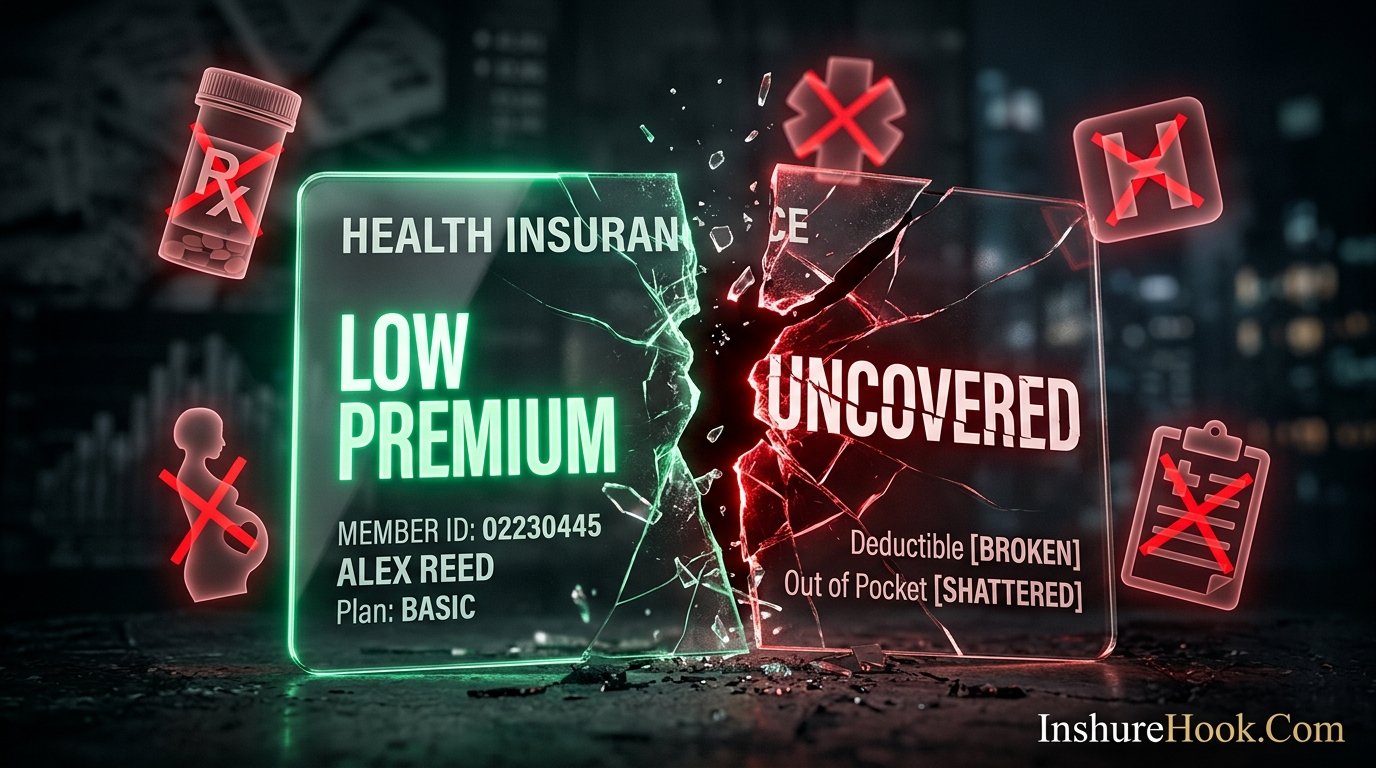
Short-term health insurance occupies a complicated place in the American healthcare market. It is cheaper than ACA marketplace coverage — sometimes dramatically so. It is also far less comprehensive, excludes pre-existing conditions, and leaves policyholders exposed to financial risks that most people do not fully understand until they need to use it.
That tension — low cost versus limited protection — is what makes short-term health insurance genuinely useful for some people and genuinely dangerous for others. This guide explains exactly what these plans are, who they are designed for, where they fall short, and what the regulatory landscape looks like in 2026 before you decide whether one makes sense for your situation.
What Short-Term Health Insurance Is
Short-term health insurance is a type of limited-duration medical coverage designed to fill temporary gaps in health insurance. As the name suggests, these plans were originally intended for short coverage windows — a few months between jobs, a gap between college graduation and employer coverage, a brief period before Medicare eligibility.
They are not ACA-compliant health plans. Short-term plans are exempt from most Affordable Care Act requirements, which is both the reason they cost less and the reason they offer substantially less coverage.
Key characteristics:
- Coverage periods of 1 to 12 months, with renewal in some states
- Medically underwritten — you can be declined or charged more based on health history
- Pre-existing conditions are typically excluded
- ACA essential health benefits are not required
- No guaranteed issue — coverage can be denied
- Premium tax credits do not apply
The federal regulations governing short-term plan duration have changed multiple times since 2018. Under rules issued by the Biden administration in 2024, short-term plans are limited to a maximum initial coverage period of four months, with renewal limited to four months — capping total coverage at four months in most cases. Some states apply even stricter limits. The Trump administration has signaled interest in reversing these restrictions, and the regulatory situation remains in flux as of June 2026. Checking current federal rules at hhs.gov and your state’s insurance department before purchasing is the most reliable approach.
Who Short-Term Plans Are Designed For
Short-term health insurance is genuinely appropriate for a specific set of situations:
Coverage gap between jobs. If you leave one employer and start another in 60 to 90 days, COBRA continuation coverage is an option but is often expensive. A short-term plan can bridge that window at significantly lower cost for generally healthy people who are unlikely to need major medical care during the gap.

Waiting for employer coverage to begin. Many employer plans have a 30 to 90 day waiting period before new employees become eligible. A short-term plan covers that window.
Young adults aging off parents’ plan. Children can remain on a parent’s health plan until age 26 under ACA rules. After that, a young, healthy person who does not qualify for marketplace subsidies may find a short-term plan an affordable option while establishing their own employment-based coverage.
Missing open enrollment. If you missed the ACA open enrollment period and do not have a qualifying life event that triggers a special enrollment period, a short-term plan may be the only coverage available until the next open enrollment window.
Supplemental coverage for healthy individuals who find marketplace plans too expensive without subsidies. This is the most contested use case — it is also the most common reason short-term plans are purchased and the situation where the gaps in coverage most frequently cause serious financial harm.
What Short-Term Plans Do Not Cover
This is the section that most short-term plan advertisements minimize. Understanding these exclusions before purchasing is essential.
Pre-existing conditions. This is the most significant exclusion. A pre-existing condition is generally defined as any health condition that existed — whether diagnosed, treated, or symptomatic — before the coverage start date. The lookback period varies by plan, but most use 12 to 24 months. If you have diabetes, hypertension, asthma, a prior cancer diagnosis, mental health history, or virtually any other ongoing health condition, claims related to those conditions will be denied.
This exclusion is not a technicality. It is applied aggressively. People who purchase short-term plans, have an apparently new medical event, and later discover the insurer retroactively classified it as related to a pre-existing condition — and denied the claim — is a documented pattern with these plans.
ACA essential health benefits — not required. ACA-compliant plans must cover ten essential health benefit categories:
- Ambulatory patient services
- Emergency services
- Hospitalization
- Maternity and newborn care
- Mental health and substance use disorder services
- Prescription drugs
- Rehabilitative services and devices
- Laboratory services
- Preventive and wellness services
- Pediatric services including oral and vision care
Short-term plans are not required to cover any of these categories. Many exclude mental health coverage, substance use treatment, maternity care, and preventive care entirely. Prescription drug coverage, when included, is often limited to a short list of generic medications.
Annual and lifetime benefit caps. ACA plans cannot impose annual or lifetime dollar limits on essential health benefits. Short-term plans typically carry caps — $250,000 to $1,000,000 in total benefits is common. If your medical costs exceed the cap, you pay the remainder personally.
Preventive care. ACA-compliant plans cover recommended preventive services at no cost. Short-term plans are not required to and often do not.
Guaranteed renewal. If you develop a health condition during a short-term plan period and the plan ends, you may not be able to renew because you now have a pre-existing condition. This creates a coverage cliff at the exact moment you most need continuity.
Real Scenarios Where Short-Term Plans Fall Short
These are not hypothetical edge cases — they reflect documented patterns in how short-term plan claims are handled.
Scenario 1: A 28-year-old purchases a short-term plan during a gap between jobs. He has no known health conditions. Three months into the coverage period, he is hospitalized for a cardiac event. During claims investigation, the insurer identifies that he had elevated cholesterol readings in bloodwork two years prior. The claim is denied as related to a pre-existing condition. He owes $47,000 in hospital bills.
Scenario 2: A 34-year-old woman purchases a short-term plan because she missed open enrollment. She becomes pregnant. Maternity care is excluded from her plan. She delivers at a cost of $12,000 for a routine birth — paid entirely out of pocket.
Scenario 3: A 45-year-old purchases a short-term plan and takes three daily prescription medications. None are on the plan’s covered drug list. He pays full retail price for all three throughout the plan period.

These scenarios are consistent with how short-term plans are structured and documented in consumer protection reports from state insurance regulators.
The Premium Difference — In Context
Short-term plans are significantly cheaper than ACA marketplace coverage. For a healthy 35-year-old, a short-term plan might cost $100 to $200 per month. A comparable Bronze ACA plan in the same market might cost $350 to $500 per month without subsidies.
That cost difference is real and meaningful. But it requires important context.
The lower premium reflects lower coverage. You are not getting the same product at a better price. You are getting a fundamentally different product with narrower coverage, exclusions for pre-existing conditions, potential claim denials, and benefit caps. The premium difference is essentially the cost of those excluded risks being transferred back to you.
ACA subsidies change the comparison significantly. If your income falls between 100 and 400 percent of the federal poverty level — or above 400 percent under the American Rescue Plan’s enhanced subsidies, which Congress has extended through 2025 and may extend further — you likely qualify for premium tax credits that substantially reduce ACA marketplace premiums. At those subsidy levels, the cost advantage of a short-term plan may be minimal or nonexistent compared to a subsidized marketplace plan.
Checking your subsidy eligibility at healthcare.gov before concluding that a short-term plan is the more affordable option is a worthwhile step.
State Regulations in 2026: A Patchwork
Short-term health insurance is one of the most state-regulated areas of the individual health insurance market. What is available in one state may be prohibited or significantly restricted in another.
States that prohibit or heavily restrict short-term plans as of 2026 include California, New York, Massachusetts, New Jersey, and several others. In these states, the individual market is structured around ACA-compliant coverage and short-term plans are not available or are so restricted as to be impractical.
States that permit longer duration short-term plans — up to 12 months with renewal options — include many in the South and Midwest where the individual market has historically had less regulatory activity.
States with specific disclosure requirements require insurers to prominently disclose that short-term plans are not ACA-compliant, do not cover pre-existing conditions, and may not cover essential health benefits. These requirements reduce the likelihood of inadvertent purchase by consumers who believe they are buying comprehensive coverage.
Your state’s department of insurance is the authoritative source for current short-term plan regulations. The NAIC state regulator directory provides direct contact information for every state.

Alternatives to Consider First
Before purchasing a short-term plan, evaluate whether any of these options are available and potentially better suited to your situation:
COBRA continuation coverage. If you recently left employer-sponsored coverage, COBRA allows you to continue that exact coverage — including all its benefits — for up to 18 months. The cost is high because you pay the full premium including the employer’s share, but the coverage is comprehensive. For people with ongoing health needs or pre-existing conditions, COBRA is almost always the better option despite the cost.
ACA marketplace special enrollment period. Losing employer coverage is a qualifying life event that triggers a 60-day special enrollment period. You can enroll in an ACA marketplace plan during this window regardless of the general open enrollment calendar.
Medicaid. If your income has dropped significantly, you may now qualify for Medicaid. Eligibility is based on current monthly income in most expansion states, not annual income. This is worth checking even if you did not qualify before.
Marketplace coverage with subsidies. As described above, income-based subsidies can make ACA marketplace coverage significantly more affordable than it appears at full premium. Running your actual income through healthcare.gov’s subsidy calculator before dismissing marketplace coverage as too expensive produces a more accurate comparison.
Catastrophic plans. For people under 30 or those with a hardship exemption, ACA catastrophic plans provide coverage with very high deductibles at lower premiums than standard marketplace tiers. They cover essential health benefits — unlike short-term plans — but cost less than Bronze, Silver, Gold, or Platinum options.
Understanding how health insurance options for self-employed individuals work covers several of these alternatives in more detail for people without access to employer coverage.
If You Do Purchase a Short-Term Plan: What to Do
If you have evaluated the alternatives and a short-term plan is genuinely the right choice for your specific situation, these steps reduce the risk of a bad outcome:
Read the exclusions list in full — before purchasing. The exclusions section of the policy document is the most important part. Not the summary. The actual policy document. Look specifically at the pre-existing condition definition, the lookback period, the excluded benefit categories, and the benefit cap.
Answer all application questions accurately. Misrepresentation on a short-term plan application is grounds for claim denial and policy rescission. Disclose all health history the application asks about, even conditions that seem minor or unrelated.
Understand that the plan is not renewable if your health changes. If you develop a condition during the plan period, the plan does not renew to cover ongoing treatment for that condition. Plan accordingly.
Keep your ACA enrollment options open. If you experience a qualifying life event — job change, marriage, birth of a child, loss of other coverage — you have 60 days to enroll in an ACA marketplace plan. Staying aware of these windows ensures you can transition to comprehensive coverage when circumstances allow.
Do not use a short-term plan as a permanent solution. These products are designed for temporary gaps. Using them as long-term health coverage — even with renewal options in states that permit them — exposes you to the compounding risk that each renewal treats prior period conditions as pre-existing.

Frequently Asked Questions
Yes. This is one of the most significant risks. If the insurer determines that the condition being treated is related to a pre-existing condition — defined by the policy’s lookback period and definition — the claim can be denied regardless of when the diagnosis occurred. Consumer protection advocates have documented this practice extensively in states that permit short-term plans.
The federal individual mandate penalty was reduced to zero starting in 2019, so there is currently no federal tax penalty for lacking ACA-compliant coverage. However, some states — including Massachusetts, New Jersey, California, Rhode Island, and Vermont — have their own individual mandate with a state tax penalty. In those states, short-term coverage does not satisfy the state mandate. Check your state’s requirements.
No. Health Savings Accounts require pairing with a qualifying High-Deductible Health Plan (HDHP) that meets specific ACA criteria. Short-term plans do not qualify as HDHPs under IRS rules. You cannot make HSA contributions during a period when your only coverage is a short-term plan.
Emergency care is typically covered under short-term plans — it is one of the more consistently included benefit categories. However, the pre-existing condition exclusion can still apply if the insurer determines the emergency is related to a prior condition. Coverage caps also apply. Emergency care coverage under short-term plans is not equivalent to emergency care coverage under an ACA plan.
No. Gap insurance and supplemental insurance (such as hospital indemnity or critical illness plans) pay fixed cash benefits and are designed to supplement comprehensive coverage — not replace it. Short-term health plans are intended to serve as primary health coverage for the plan period. They are different products designed for different purposes.
Disclaimer: This article is intended for general educational purposes only and does not constitute legal, financial, or insurance advice. Short-term health insurance regulations, federal rules, and state laws are subject to change and vary significantly by state. The regulatory status of short-term plans as of June 2026 reflects publicly available information at the time of writing. Always verify current federal and state regulations and consult a licensed insurance professional before purchasing any health insurance product.
Written by Imran Ahmad, content writer specializing in insurance education | InsureHook.com
Content reviewed against publicly available regulatory sources. Readers should verify current plan terms, state availability, and subsidy eligibility directly with their state’s insurance department or a licensed professional.
Sources: U.S. Department of Health and Human Services (hhs.gov), Healthcare.gov (healthcare.gov), National Association of Insurance Commissioners (naic.org), Centers for Medicare and Medicaid Services (cms.gov)
