


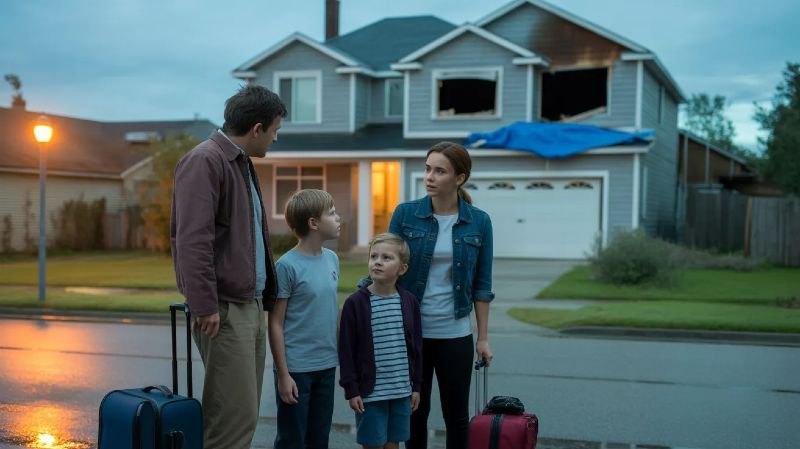
Loss of use coverage in your homeowners insurance policy pays for additional expenses incurred if a covered loss event makes it impossible to live in your home while you’re having it repaired, such as a fire, or a burst pipe. One of the coverages most people don’t consider until they have a need for it.
Then all of a sudden, you get an invoice from the hotel and a stack of receipts from the restaurants, and this relatively innocuous line from your declarations page becomes the thing between you and financial strains. This guide explains the coverage of a loss of use, what it doesn’t cover and how to ensure that your limit is sufficient.
So, what is the actual meaning of the term “loss of use?
This is also referred to as additional living expenses coverage (ALE) or sometimes as Coverage D. All refer to the same coverage: coverage for the extra costs you would have to pay if you were displaced and required additional living expenses.
That distinction matters. Even when your kitchen floods, your mortgage payment doesn’t come to a stop. Loss of use is not to replace expenses that you would have anyway. It’s only worth it because of the added amount, or what you’re spending at restaurants versus what you spend at home at night, or if you move somewhere and stay in a hotel versus a house.
This is covered typically under standard homeowners, condo or renters policies. Usually it’s something that you don’t have to pay extra for as long as you don’t raise the limit above what it is built in.
When Does Loss of Use Insurance Start?
Loss of use only becomes active on the two conditions at once! Firstly, it is not an inconvenient house, but a house that is really unsafe or unliveable. Secondly, the fact that it is not habitable must go back to something that is dangerous that you are insured for.
Failing to have anything basic in a home, such as electricity, running water or basic structural safety, is what would usually make a home uninhabitable. Common triggers include:
- Fire or smoke damage.
- Damage due to windstorm or hail.
- Be sure to watch for burst or frozen pipes.
- Lightning strikes
- Some forms of water damage from an enclosed source.
That’s where the problem lies. If your basement is flooded due to a rise in the river, it’s most likely a flood and most homeowners policies do not cover it. Even if your house is damaged and you can’t use it, you would not be entitled to any loss of use benefits if it was not covered by a peril.

What is covered by Loss of Use Coverage?
With the claim accepted you may receive quite a bit of coverage for costs that are directly related to your displacement, including loss of use.
| Category | Typically Covered |
|---|---|
| Temporary housing | Hotel, extended-stay rental, short-term lease |
| Food | The difference between normal grocery costs and eating out |
| Transportation | Extra mileage or commuting costs from a temporary location |
| Pet boarding | Kennel or boarding fees while displaced |
| Laundry | Laundromat costs if you can’t do laundry at home |
| Storage | Short-term storage for undamaged belongings |
| Lost rental income | If you rent out part of your home and tenants have to move out |
You’ll need to retain all receipts. Loss of use is actually cost basis and typically the insurance company will require proof before paying.
Loss of Use Insurance does not include damages for the following:
This is the area in which people are most likely to get it wrong, so don’t be afraid to say what you mean.
- You still get your bills, just like usual. You still receive your bills as usual. The money you would pay for mortgage, rent and utilities are not returned.
- No one gets anything if they’re exposed to dangers. If it’s caused by a loss that’s not covered by your homeowners’ insurance, such as a flood or wear and tear, loss of use is not applicable.
- Rarely will cosmetic or minor damage be an acceptable reason for coverage. Most insurers will not allow an ALE claim if your home is still habitable while it is being repaired.
- Voluntary relocation is NOT covered. If the property isn’t unsafe, but it has noise or other issues that make the property “uncomfortable,” it is not typically sufficient to choose an alternative dwelling.
What amount of LOU coverage will you receive?
Most policies have a percentage limit for loss of use and most insurers will vary the limit according to the limit of the dwelling coverage. Typically, about 20% of the limit of your dwelling, but some carriers will accept as little as 10% or as much as 30%.
Assume that your dwelling coverage is $300,000 and the loss of use percentage is 20%. This means you can recoup up to $60,000, over the duration of repairs.
| Dwelling Coverage | 10% Limit | 20% Limit | 30% Limit |
|---|---|---|---|
| $200,000 | $20,000 | $40,000 | $60,000 |
| $300,000 | $30,000 | $60,000 | $90,000 |
| $400,000 | $40,000 | $80,000 | $120,000 |
Renters insurance is a bit different, as there’s no dwelling coverage to base a percentage. Renters policies usually establish a set limit on the amount of loss of use benefit, like $5,000, or will figure it by a percentage of the personal property coverage.

Often, an insurer will review your bank or credit card statements from the last few months and base your “normal” payment on that to determine what your baseline is. It is beneficial to have a general idea of how much you are spending on food and utilities each month prior to submitting your application. This is the baseline that you will be deducted from your temporary expenses to find out how much you will be reimbursed.
Some policies limit the length of time (as well as dollar amount) that you can collect, so be sure to check your declarations page for both amounts and time limits.
Loss of Use is one of the various coverages in home insurance.
It’s helpful to compare loss of use with coverages that you are likely more familiar with.
Advantages of a strong LOU coverage:
- Prevents you from dipping into your savings – which is already a stressful time in a repair.
- Takes care of expenses that are not part of most people’s budget, such as boarding for pets, or running errands at the laundromat.
- This is an automatic coverage for most standard policies and there is no additional premium for this coverage.
Things to be aware of that may be a drawback:
- Does not help if damage is caused by a peril for which no coverage is included (excluded peril)
- Asks for documentations and receipts; increases the difficulties of this tough period.
- In high cost of living areas, or as a result of lengthy rebuilds, base limits may be reduced.
When you’re looking at this in comparison to the coverage on your dwelling or your deductible, keep in mind that this is a bucket all on its own. It does not decrease the amount of dwelling coverage you have and its own limit is distinct from the amount of repair coverage you may have.
Different ways to submit a Loss of Use claim.
This type of claim is substantially similar to a typical homeowners claim and has some additional steps specific to the displacement claim.
- Report immediately damage to the respective building owner. The more quickly you notify, the sooner it’s approved and the less time there is for timing to be an issue.
- Specifically ask your adjuster if they will consider loss of use. Some insurers may not mention it in their initial proposal so you need to ask them about it.
- Keep every receipt. All hotel receipts, restaurant bills, boarding receipts, etc.
- Keep a record of your “regular” expenses as well. You need to present the savings/amounts saved between what you would normally spend and what you are spending.
- Make claims for reimbursement on a frequent basis. Don’t submit the history of receipts for months at a time when the job is completed.
Let the tenant know right away if you have any part of your property that you are renting out. Lost rental income while displaced is readily recoverable, but can be difficult to track if not stated from the start.
Also, you should contact your insurance company and find out if they compensate you for any advance payments for hotels until your claim is settled. Some companies can make some advance payments for your immediate hotel expenses. If you’re displaced for weeks, it could be a strain on your finances to wait for reimbursement until your claim is complete.
A Real-World Example
Imagine a fire in the kitchen escalates into the ceiling and wreaks havoc on the electrical wiring in half the house.Suppose there’s a kitchen fire that makes its way into the ceiling and smashes and burns the wiring in half the house. The electrician states that it’s not safe to restore power until repairs are finished and the contractor estimates that there will be 6 weeks of work.
You and your family check in at an extended stay hotel. No working kitchen – this means meals are more expensive. The hotel doesn’t accept pets, so the dog must be left at a hotel where they can be boarded. As long as you are not exceeding your policy’s limit and you are keeping detailed receipts, all of those costs are covered by loss of use, including the hotel costs, extra food costs, etc., and boarding fees.
Now, compare that to a situation in which a windstorm flattens a few shingles and leaves a small stain on the ceiling but doesn’t otherwise cause any damage to the house, so it still remains perfectly safe to live in. If so, an insurance company would most likely reject a claim for loss of use, since the property is still habitable, but has yet to be restored to its former condition.

Coverage for civil authority & evacuation.
Some policies provide even more loss of use coverage than loss of property damage. Many homeowners policies have a clauses called civil authority, which may assist with paying for coverage of temporary living expenses if a government order requires you to evacuate your neighborhood, prior to the time that your home is actually damaged.
This usually occurs in the event of wildfire, hurricane or great flood when a whole block is evacuated as a precaution. Generally, coverage is restricted to a shorter time period (usually two weeks or less) and coverage will only apply if the evacuation order is due to a covered peril close by. If you reside in an area vulnerable to the risk of wildfire, it’s important to ask your agent in particular if this is included in your policy and for how many days.
The loss of use applies to renters and not homeowners.
Loss of use is also covered by renters insurance, although the coverage is slightly different from homeowners’ insurance. Renters never have dwelling coverage and could not determine the limit based on a dwelling that isn’t shown on their policy.
Renters policies typically, however, limit the loss of use coverage as a fixed dollar amount or a percentage based on personal property coverage. The claims process is similar: Show the damage, verify that it is a covered peril and provide receipts for expenses in excess of typical expectations. Landlords have their own building policy which advises tenants to have their own temporary housing policy, so it’s a good idea to have a rental policy anyway.
Frequantly Asked Quations
Yes, it is in nearly every standard homeowners, condo and renters insurance policy. Typically, it is automatically included as Coverage D (no additional coverage need to be added).
No. Displacement doesn’t put an end to your mortgage, rent and regular utility costs, which aren’t covered. Only use losses pay for costs over and above “normal.”
Loss of use would not apply as a standard homeowners policy will not cover flood damage. If this were the case, you would need to have a flood insurance policy to cover such a situation.
In most cases, yes. Many insurers let you raise the percentage or set a higher flat limit for an additional premium, which is worth considering if you live somewhere with high hotel or rental costs.
It typically lasts as long as repairs reasonably take, up to your policy’s dollar limit and any stated time limit. Extended rebuilds after major disasters can sometimes push closer to that ceiling.
