


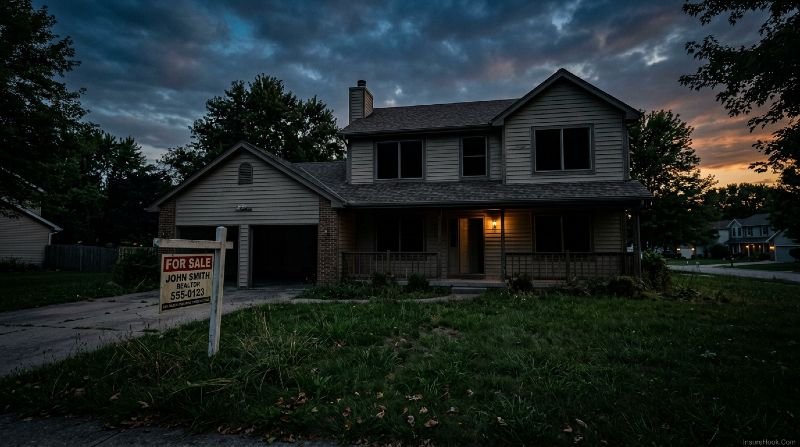
TL;DR: If your home sits empty beyond 30 to 60 days, your standard homeowners policy likely suspends key coverages like vandalism and water damage protection. Check your policy’s vacancy clause today and contact your insurer before that threshold passes.
Most homeowners never think about what happens to their insurance when a house sits empty. You close the door, head to a new city for work or put the home on the market, and assume your regular policy still covers you. That assumption can be expensive.
Vacant home insurance exists because standard homeowners policies treat empty houses very differently from occupied ones. Knowing when you need it can save you from finding out the hard way.
What “Vacant” Actually Means to Your Insurer
Insurance companies draw a hard line between a home that is temporarily unoccupied and one that is truly vacant. The difference matters more than most people realize.
An unoccupied home usually means the owners are away but personal belongings remain inside. Think of a seasonal property or a house where the owner travels for a month. A vacant home, by most policy definitions, is one where the people have left and the furnishings have gone with them.
The specific threshold varies by insurer and by state. Some carriers define vacancy as 30 consecutive days without occupancy. Others use 60 days. According to the National Association of Insurance Commissioners (NAIC), vacancy clauses are standard across most U.S. homeowners policies and the threshold language differs meaningfully between carriers. Reading your current policy’s vacancy clause before leaving a property unattended is one of the most practical steps you can take.
“Standard homeowners policies include vacancy clauses for a straightforward reason. An unoccupied home faces a genuinely different risk profile. Vandalism, undetected water leaks, and fire damage that goes unreported for days all become far more likely when no one is present. Insurers price their products around the assumption that someone is home regularly.”
🏠 Expert Insight: Licensed property and casualty insurance advisor with over 15 years of residential underwriting experience.
Why Standard Policies Fall Short on Empty Homes
Here is the core problem. When a home sits vacant past the policy’s defined threshold, many carriers suspend specific coverages or deny claims outright if the vacancy contributed to the loss.

This is not buried fine print. It is a standard industry practice backed by actual loss data.
Common coverages that often get suspended once a home crosses the vacancy threshold include:
- Vandalism and malicious mischief coverage (frequently the first to go)
- Water damage from burst pipes left undetected for days
- Glass breakage claims
- Liability protection in some carrier policies
Take Marcus, for example. He inherited his father’s home in Ohio and spent four months settling the estate while living in another state. The home sat empty throughout. A pipe froze and burst in January. When Marcus filed a claim, the insurer denied the water damage portion citing the policy’s 60-day vacancy clause. The home had been empty for 112 days. Repairs came entirely out of his own pocket. (Anonymized example based on common claim patterns; see state insurance department complaint data for similar documented cases.)
That outcome is preventable with the right coverage in place before the vacancy clock runs out.
Understanding what a standard homeowners policy covers is the starting point for recognizing exactly where a vacant property creates a gap.
When Vacant Home Insurance Is Actually Required
There is no universal federal requirement for vacant home insurance. State laws and lender agreements drive most of the practical mandates. Certain situations create a strong or near-mandatory need for it.
Mortgage Lenders
If you carry a mortgage on a property, your loan agreement almost certainly requires adequate insurance coverage at all times. When your standard policy’s vacancy clause kicks in and suspends coverage, you are technically in violation of your loan terms. Most mortgage servicers require notification if a property becomes vacant. Some require a specific replacement policy.
Probate and Estate Properties
Homes held in estates often sit vacant for months while legal processes resolve. Executors have a fiduciary duty to protect estate assets. Allowing insurance to lapse or become inadequate can expose the executor to personal liability.
Homes Listed for Sale
A home staged and listed can easily sit unoccupied for weeks or months in a slow market. The standard policy may remain technically in force during that early window but the vacancy clause exposure grows with every passing week.
Active Renovation Projects
A home stripped of fixtures, appliances, or interior walls may qualify as vacant under some policy definitions even if contractors visit regularly. Separate builder’s risk coverage or a vacant home endorsement often makes more sense during major renovations than assuming a standard policy will respond.
How Vacant Home Policies Actually Work
Vacant home insurance is typically written as a standalone policy or as an endorsement added to an existing policy. Standalone policies are more common when the home will be empty for an extended period.
Coverage usually runs for three, six, or twelve months at a time. Rates are higher than standard homeowners insurance because the risk profile is genuinely elevated. According to the Insurance Information Institute, specialty vacant property coverage can cost roughly 1.5 to 3 times more than a comparable occupied home policy depending on location, property condition, and selected coverage limits.
| Coverage Element | Standard Homeowners Policy | Vacant Home Policy |
|---|---|---|
| Fire and smoke damage | Yes | Yes |
| Vandalism | Yes (suspended after vacancy threshold) | Yes (typically included) |
| Water damage from burst pipes | Yes (may be excluded if vacant) | Yes (often included with conditions) |
| Liability protection | Yes | Varies by carrier |
| Theft of contents | Yes if personal property present | Limited or excluded |
| Glass breakage | Yes (may be excluded if vacant) | Yes in most policies |
| Vacancy threshold concern | Yes (30 to 60 day clause is common) | No vacancy exclusion applies |
Personal property coverage becomes a separate question with vacant homes. If the home is truly empty there may be nothing inside worth insuring. Reviewing how personal property coverage works on your current policy helps clarify whether it makes sense to keep, adjust, or drop that component during a vacancy period.
The Overlooked Risk: Liability on Empty Property
Liability coverage on a vacant property gets ignored far too often.
A vacant home still generates real liability exposure. Someone trespassing and getting injured. A neighbor’s child entering through an unlocked side gate. A contractor visiting for an estimate who slips on an icy porch step. Depending on your state’s premises liability laws, a property owner can face a lawsuit regardless of whether the home was occupied at the time of the injury.
Some vacant home policies include basic liability. Others exclude it entirely. That gap deserves a direct conversation with your insurer or broker before assuming anything about your protection.
Is your current policy genuinely designed for a home that nobody lives in? That is the right question to sit with before you hand over the keys and walk away.
State Variations You Cannot Ignore
Insurance is regulated at the state level in the United States. Vacancy definitions, required disclosures, and available policy options differ significantly across the country. A 60-day threshold in one carrier’s policy sold in Texas may be 30 days in a different carrier’s policy in the same state.
California wildfire risk, Florida hurricane exposure, and Midwestern freeze conditions all shape how insurers underwrite vacant properties differently. What is available and affordable in Arizona may be restricted or expensive in Louisiana. Always verify current requirements with a licensed agent in your state. Your state’s insurance department is a reliable starting point for understanding local rules.

Practical Steps Before Leaving a Home Vacant
Vacant Coverage Risk Checker
Check if your home may have crossed a typical vacancy threshold.
Read your current policy’s vacancy clause before the property becomes empty. Find out exactly how many days trigger the exclusion. Call your insurer before hitting that threshold rather than after.
Reducing the physical risk profile of the property at the same time helps both your premium and your claim outcomes. Here are the most practical steps to take:
- Shut off the main water supply or install a smart leak detection device before leaving
- Set the thermostat to a minimum safe temperature during cold weather months
- Install exterior lighting or a security camera to deter vandalism and unauthorized entry
- Notify local police non-emergency lines that the property will be unoccupied for an extended period
- Maintain the lawn and exterior appearance so the home does not visibly signal long-term abandonment
- Document every visit to the property with dated photos and written notes in case a carrier questions occupancy status during a claim
Some insurers offer premium reductions for properties with monitored security systems or when a designated person checks on the home weekly. Ask specifically about those options when shopping for a new policy.
What Happens If You File a Claim Without Proper Coverage
An insurer who discovers a vacancy during a claim investigation has grounds to invoke the vacancy exclusion. The claim can be reduced significantly or denied outright for excluded perils.
Vacancy-related claim disputes show up regularly in state insurance department complaint filings. Knowing the home insurance claims process before something goes wrong gives you a real advantage. Understanding what documentation you will need and how vacancy status may be questioned prepares you for a smoother process.
One practical note: if you eventually need to file a loss of use claim related to displacement from a damaged property, coverage terms on a vacant home policy differ from a standard policy. Reviewing loss of use coverage basics helps set accurate expectations before a problem arises.
Costs, Deductibles, and Coverage Limits
Vacant home policies typically carry higher deductibles than standard policies. A $2,500 or higher deductible is common. The tradeoff is real coverage versus no meaningful coverage at all. Understanding your deductible options and how they interact with the likely cost of a claim helps you choose a structure that makes financial sense.
Base dwelling coverage on the cost to rebuild. Do not confuse market value with replacement cost. An older home in a high-cost market may sell for far more than it would cost to rebuild after a fire. Accurate dwelling coverage is always more useful than inflated limits that drive up your premium without adding real protection.
How This Article Was Researched
Information in this article draws on guidance from the National Association of Insurance Commissioners (NAIC), published resources from the Insurance Information Institute (III), state insurance department consumer guidance documents, and review of standard homeowners policy language from multiple U.S. carriers. Pricing ranges and vacancy threshold figures reflect industry-standard practices as of May 2026.
Frequently Asked Questions
Most standard homeowners policies include a vacancy clause that triggers after 30 to 60 consecutive days. The exact threshold depends on your specific policy language. Check the declarations page or call your insurer directly to confirm.
No state currently mandates it by law for all situations. Lenders with an active mortgage on the property typically require continuous adequate coverage as a loan condition. Failing to maintain that coverage can violate your loan agreement regardless of state law.
Some insurers offer a vacancy permit endorsement that temporarily extends coverage. Not all carriers offer this option. Ask your current insurer first before shopping for a standalone policy.
Renovation scenarios often require builder’s risk coverage or a dwelling under construction policy. Standard vacant home insurance may not respond to a home in active renovation. Confirm with your carrier what applies to your specific situation and timeline.
Liability coverage availability varies by policy. Some vacant home policies include it. Others exclude it entirely. Ask your insurer specifically about liability limits and covered scenarios before purchasing any vacant home policy.
Contact your current insurer immediately if the home has been unoccupied beyond your policy’s vacancy threshold. Request a vacancy endorsement or ask about a standalone policy. Do not wait until after a loss to address the gap.
Educational Disclaimer
This article is intended for general informational purposes only. Insurance laws, policy terms, coverage definitions, and availability vary by state and by insurer. Nothing in this article constitutes legal or financial advice. Always consult a licensed insurance professional in your state for guidance specific to your situation and property. Coverage details described reflect general industry practices as of May 2026 and are subject to change.
