



If your car mostly sits in the driveway — weekend trips, the occasional grocery run, maybe a doctor’s appointment — you’ve probably wondered why you’re paying the same premium as someone commuting 45 minutes each way, five days a week. That gap has always felt a little unfair. Pay per mile car insurance exists specifically to close it.
But whether it actually saves you money depends on some pretty specific circumstances. Let’s work through this honestly.
What Pay Per Mile Insurance Actually Is
The concept is straightforward. Instead of a flat annual premium calculated mostly on demographics and driving history, you pay a base rate — a fixed monthly charge — plus a per-mile rate multiplied by however many miles you actually drive that month.
So if your base rate is $40/month and your per-mile rate is $0.07, and you drive 400 miles in a given month:
$40 + (400 × $0.07) = $68 total for that month
Compare that to a traditional policy that might charge $110–$130/month regardless of whether you drove 400 miles or 1,400.
That difference is the entire value proposition. Whether it applies to you comes down to how much you’re actually behind the wheel.
How Mileage Gets Tracked
This is where people often have questions, and it’s fair to be a little skeptical.
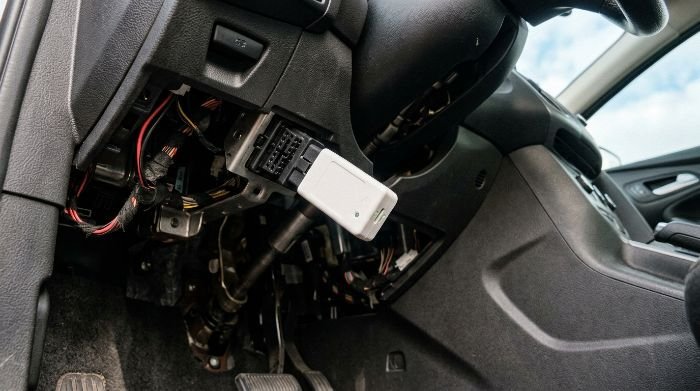
Most pay-per-mile insurers use either a plug-in OBD-II device (a small dongle that connects to a port usually located under your dashboard) or a smartphone app to track your mileage. Some newer programs integrate directly with your vehicle’s built-in telematics system.
The key distinction — and this matters — is that most pay-per-mile programs only track distance, not driving behavior. They’re not grading your braking, acceleration, or whether you were on your phone. That’s a different product category called usage-based insurance or UBI, which overlaps but isn’t quite the same thing.
Milewise by Allstate, SmartMiles by Nationwide, and the Lemonade-integrated Metromile program are among the more established options in the U.S. Each has slightly different structures, caps, and tracking methods, so comparing actual numbers before committing is worth your time.
Who Actually Benefits From This

Here’s a realistic picture of who tends to come out ahead.
Low-Mileage Drivers (The Obvious Ones)
The general industry benchmark is roughly 10,000–12,000 miles per year as the average American driver. If you’re consistently driving less than 7,000–8,000 miles annually, pay per mile starts to look genuinely competitive.
Think about who that might be:
- Remote workers who only drive for errands
- Retirees with a second car sitting mostly idle
- City residents who rely on transit most of the week
- People who own a vehicle mainly as backup
Consider someone who works from home in suburban Phoenix and drives maybe 5,000 miles a year — mostly weekend errands and the occasional trip across town. Under a hypothetical pay-per-mile structure with a $35 base rate and a $0.06/mile charge, their monthly cost might land around $65, compared to a traditional policy running closer to $90–$100 for a similar driver profile.
Note: These figures are a hypothetical illustration only. Actual rates vary significantly by insurer, ZIP code, vehicle type, driving history, and state.
That kind of difference — even a smaller one — adds up across twelve months. But again, your specific numbers are what matter, not anyone’s example.
Multi-Car Households With One Underused Vehicle
This is a scenario that doesn’t get discussed enough. A lot of families have two cars, and one of them — often the second vehicle — sits around far more than the primary car. Putting that second car on a pay-per-mile policy while keeping the main vehicle on a standard plan can be a smart split worth running the numbers on.
When It Doesn’t Make Sense
Equally important: this product isn’t for everyone, and no one should pretend otherwise.
If you drive more than 12,000–15,000 miles per year, you could easily end up paying more than a traditional policy. The per-mile charges stack up fast at higher volumes. Most programs don’t offer discounts once you exceed a certain threshold — the cost just keeps climbing linearly.
Road trippers or people with inconsistent mileage month to month might also find the unpredictability frustrating. A single month with heavy driving can push a bill significantly higher than expected.
It also doesn’t help drivers who are already getting competitive rates through multi-policy bundles or loyalty discounts on traditional plans. If your conventional insurer already has you at a solid monthly rate with bundled discounts, switching for a small potential difference probably isn’t worth the friction.
The Privacy Conversation
It’s worth being direct about this.
Any telematics-based product involves sharing data with your insurer. While most pay-per-mile programs claim to track only mileage, the data that is collected still passes through private systems. Some programs do track location data to calculate routes and verify mileage, even if they don’t use it for rating purposes currently.
That’s a personal calculation. Some drivers genuinely don’t mind. Others find it uncomfortable. Neither position is wrong.
The National Association of Insurance Commissioners (NAIC) has published guidance on telematics and consumer privacy, and it’s worth understanding what your state’s framework looks like before enrolling in any program. Insurance regulation varies meaningfully by state, and what’s permissible in how data is used differs across the country.
How It Compares to Traditional Auto Insurance
| Feature | Pay Per Mile | Traditional Auto |
|---|---|---|
| Monthly cost structure | Base rate + per-mile charge | Fixed premium |
| Best for | Under ~8,000 miles/year | 10,000+ miles/year |
| Cost predictability | Variable month-to-month | Consistent |
| Coverage options | Similar (liability, comp, collision) | Full range |
| Data sharing | Mileage tracking required | Optional telematics |
| Discount structure | Varies by program | Multi-policy, loyalty common |
| State availability | Limited (varies by insurer) | Nationwide |
Coverage itself — the actual protections you get — is generally comparable. Pay-per-mile doesn’t mean stripped-down coverage. You can still get collision and comprehensive protection, liability limits, and the other standard components. The difference is purely in how the premium is calculated, not in what the policy does when you need it.
A Note on Coverage and Deductibles
One thing that sometimes gets lost in the mileage conversation: the structure of your premium has no bearing on your deductible. Whatever you’ve chosen — $500, $1,000, $2,000 — applies the same way when you file a claim. If you’re unsure how that deductible decision affects your overall costs, that’s a separate but related calculation worth thinking through. Understanding how deductibles work can help you optimize the full picture, not just the monthly charge.
What Makes the Pricing Work — Or Not
The Mileage Math
Before calling any insurer, figure out your actual annual mileage. Not an estimate — pull your odometer readings from two consecutive service visits or check your maintenance records. People consistently overestimate or underestimate this number. The miles you think you drive and the miles you actually drive are often meaningfully different.

Then run the calculation using the specific base rate and per-mile rate of the program you’re evaluating. Don’t compare against a generic average — compare against your actual current premium.
State Availability Is a Real Constraint
Not every program is available in every state. Some insurers have rolled out pay-per-mile in limited markets, and regulatory approval varies. Before getting attached to a specific program, confirm it’s actually offered where you live. Your state’s department of insurance website is the most reliable place to verify current availability.
Daily Mileage Caps
Some programs cap the chargeable miles at a daily maximum — say, 150 or 250 miles. On a long travel day, you’d only be charged up to that cap even if you drove further. This is a genuinely consumer-friendly feature that’s worth specifically looking for when comparing programs. Not all programs offer it.
What Insurers Are Still Looking at Beyond Mileage
Even within a pay-per-mile structure, your driving history, credit score (in most states), vehicle type, and location still influence your base rate and per-mile charge. This isn’t purely a mileage game — mileage layers on top of traditional underwriting factors.
A low-mileage driver with a recent at-fault accident might find their pay-per-mile savings significantly diminished by a higher base rate. Understanding how car insurance premiums are calculated gives you a cleaner sense of what’s actually driving your quote, so you can evaluate the per-mile component in the right context.
Three Questions Most People Forget to Ask
This is where the conversation usually stops — but it probably shouldn’t.
Most guides tell you to compare rates and check your mileage. That’s the obvious part. What tends to get skipped are the program-specific details that only surface after you’re already enrolled.
First: “Does your program share mileage or location data with third parties, or is it used only for rating purposes internally?”
This isn’t a gotcha question — it’s a reasonable one. Not all programs limit data use to premium calculation. Some share aggregated or individual data with affiliated entities. Asking directly, and reading the privacy policy specifically on this point, tells you more than the marketing page will.
Second: “If I move to a different ZIP code mid-policy, does my base rate get recalculated?”
Location is a significant pricing factor in personal auto insurance. A move — even to a neighboring town — can shift your base rate, sometimes substantially. This matters more for pay-per-mile than traditional policies because the base rate is the fixed anchor of your monthly cost. Knowing upfront whether and how it resets avoids surprises.
Third: “If I file a claim, does my per-mile rate increase separately from my base rate, or do they move together?”
This is almost never addressed in standard comparisons. Different insurers handle post-claim rate adjustments differently within the pay-per-mile structure. Some raise the base rate. Some adjust the per-mile charge. Some do both. Understanding this before a claim — not after — gives you a realistic sense of the long-term cost picture.
These three questions won’t take long to get answered, and the responses will tell you more about a program’s actual consumer experience than any comparison chart.
Pay Per Mile Savings Estimator
Enter your details below to see a rough cost comparison.
Results are illustrative only — not an insurance quote.
Please fill in all fields with valid numbers before calculating.
Monthly Cost Comparison
Estimated Annual Difference: —
—
Illustrative estimates only. Actual pay-per-mile rates vary by insurer, state, vehicle type, driving history, and other underwriting factors. This tool does not generate insurance quotes. Consult a licensed insurance professional for accurate pricing.
FAQs
Yes, in most cases. You can still select liability coverage, collision, comprehensive, and other standard options. The difference is in how the premium is priced, not in what the policy covers when you need it.
Your bill reflects that higher mileage. Some programs have daily caps that limit extreme single-day charges, but there's no penalty for driving more — your cost increases proportionally for that month only.
Generally yes. Most states allow you to cancel and switch insurers without long-term penalties, though you should review any cancellation terms specific to your program before enrolling.
It depends on the specific program. Pay-per-mile programs are designed to track distance only, but some blend mileage with behavioral data. Look specifically for "mileage-only tracking" language in the program's privacy policy or terms before enrolling — the marketing page and the actual terms don't always say the same thing.
Enrolling itself doesn't. Your existing driving record, claims history, and credit-based insurance score still factor into your base rate, the same as traditional insurance. The mileage tracking data is used for billing, not for reporting to external databases.
Yes. Availability varies by insurer and requires state regulatory approval. Check directly with individual providers or your state's department of insurance for current availability. The NAIC consumer information page can help you find your state regulator quickly.
This article is for educational purposes only and does not constitute insurance or financial advice. Coverage options, pricing structures, program availability, and regulatory requirements vary by insurer and state. Rates and scenarios mentioned are hypothetical illustrations only. Consult a licensed insurance professional or your state's department of insurance for guidance specific to your situation.
