


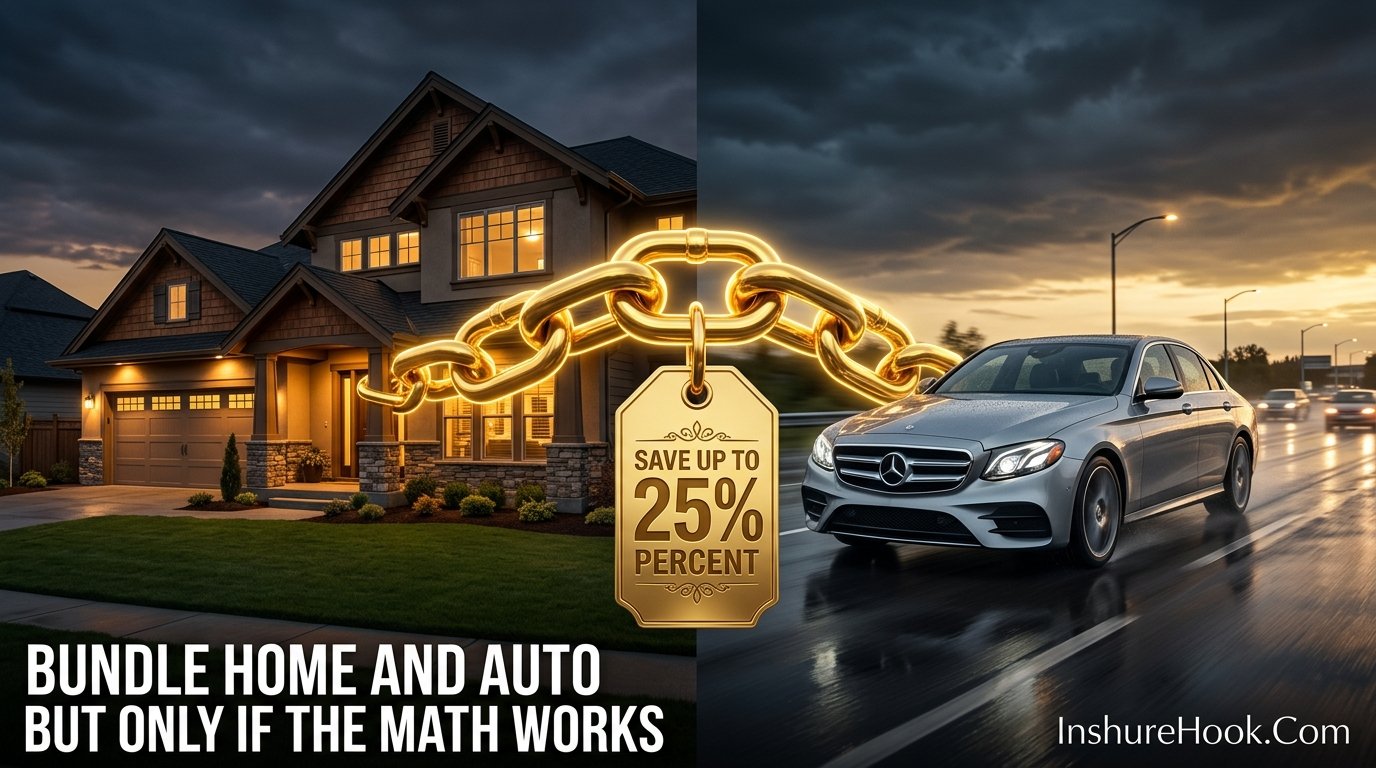
If you’ve ever gotten an insurance quote, you’ve probably heard the pitch: “Bundle your home and auto and save.” It’s one of the most common upsells in the industry. But does bundling home and auto insurance actually save you money, or is it just a sales tactic? Honestly, the answer is — it depends, and I want to walk you through exactly when it works and when it doesn’t.
What Bundling Actually Means
Bundling simply means purchasing two or more insurance policies — typically home and auto, but sometimes including renters, umbrella, or life insurance — from the same insurance company. Instead of having separate carriers for each policy, you consolidate everything under one provider.
Insurers offer this as a multi-policy discount, sometimes called a multi-line discount, because keeping a customer’s entire insurance portfolio reduces their acquisition costs and increases customer retention. You’re essentially getting a price break in exchange for giving the insurer more of your business.
How Much Can You Actually Save?
This varies significantly by insurer, state, and your specific risk profile, but here’s a general range based on typical industry discounts:
| Policy Combination | Typical Discount Range |
|---|---|
| Home + Auto | 5% to 25% |
| Auto + Renters | 5% to 15% |
| Home + Auto + Umbrella | Often the largest combined discount |
| Auto + Life Insurance | Smaller discount, 2% to 5% in some cases |
The Insurance Information Institute notes that bundling discounts vary considerably between insurers, which is exactly why comparing bundled quotes against separate policy quotes from different carriers is worth the extra time.
When Bundling Genuinely Makes Sense
You’re already satisfied with one insurer. If you have home insurance with a company you trust and they offer competitive auto rates too, bundling consolidates your relationship without sacrificing quality.
You want simplified billing and management. One insurer means one login, one set of contacts, one renewal date to track (in many cases), and often one point of contact if you ever need to file a claim across both policies.
The combined discount beats separate best-in-market rates. Sometimes the bundled price genuinely is the lowest total cost you can find, even after shopping competitors separately.
You’re building a long-term relationship for loyalty benefits. Some insurers offer additional perks for long-term, multi-policy customers — accident forgiveness, disappearing deductibles, or priority claims handling.

When Bundling Might Actually Cost You More
This is the part most bundling pitches don’t mention. Sometimes, shopping separately produces a lower total cost than bundling with one carrier.
One insurer might excel at auto but be mediocre at home insurance (or vice versa). Insurers specialize. Some are genuinely competitive on auto pricing but charge more for home coverage relative to the market, or the reverse. The bundled discount might not fully offset the higher base rate on the weaker line of business.
You live in a region with specific risk factors. If you’re in a high-risk flood zone or wildfire-prone area, a specialized home insurer might offer dramatically better home coverage pricing than a generalist that also handles your auto policy — even after factoring in the bundling discount you’d lose.
Your driving record or claims history varies significantly between household drivers. If one driver on your policy has a clean record and another has violations, this can sometimes be handled more favorably by a specific insurer that weighs that particular factor differently.
The only way to know for certain is to actually run the comparison: get a bundled quote, then get separate quotes for home and auto from at least two or three other carriers each, and compare the total annual cost.
How to Actually Compare Bundled vs. Separate Pricing
Here’s a practical approach that takes maybe 30 to 45 minutes but can save real money:
- Get a bundled quote from your current insurer or a major carrier for both home and auto together.
- Get a separate auto-only quote from two or three different insurers.
- Get a separate home-only quote from two or three different insurers.
- Add up the best separate auto quote and the best separate home quote.
- Compare that total against the bundled price.
Sometimes the bundle wins. Sometimes mixing and matching carriers wins. There’s no universal answer — it depends entirely on your specific risk profile and the carriers you’re comparing.
What Happens If You Need to Drop One Policy
This is a practical consideration people don’t always think about upfront. If you bundle and later need to cancel one policy — say you sell your home and start renting, or you sell your car — your remaining policy’s bundling discount typically disappears or gets reduced.
Before bundling, it’s worth asking your insurer directly: “If I drop one of these policies later, what happens to my discount and rate on the remaining policy?” Getting this answer in writing, or at least documented in an email, protects you from surprises down the road.
Bundling and Claims: Does It Affect How Claims Are Handled?
Some people assume bundling means better claims service, since the insurer has more of your business. This isn’t guaranteed, but there can be practical advantages.
If a single event damages both your home and your car — a tree falling during a storm, for example — having both policies with the same insurer can streamline the claims process. You’re dealing with one company, one adjuster team (sometimes), and one set of contact points rather than coordinating two separate claims with two separate companies.
That said, claims handling quality varies by insurer regardless of whether you’re bundled. A well-rated insurer for claims satisfaction is a better choice than a poorly-rated one, bundled or not. Checking J.D. Power’s annual insurance satisfaction studies before committing to any single insurer for multiple policies is a reasonable step.

Other Policies You Can Add to a Bundle
Home and auto are the most common combination, but several other policies can sometimes be bundled for additional discounts:
Umbrella insurance often requires you to already have underlying home and auto coverage with the same insurer, making it a natural addition to an existing bundle. It provides liability protection above your home and auto limits — typically starting at $1,000,000 in coverage for a relatively modest annual premium.
Renters insurance bundled with auto works similarly to home and auto bundling for those who don’t own property.
Life insurance is sometimes available as a smaller bundling discount, though life insurance underwriting is different enough from property and casualty insurance that the discount tends to be modest.
Boat, motorcycle, or RV insurance can often be added to an existing auto policy or bundle for additional savings if you own recreational vehicles.
Discounts That Stack With Bundling
Bundling discounts often combine with other discount categories, meaning your total savings can exceed the bundling discount alone. Common stackable discounts include:
- Safe driver or accident-free discounts
- Home security system discounts
- Claims-free history discounts
- Paperless billing and autopay discounts
- Multi-vehicle discounts if you insure more than one car
Ask your insurer for a complete list of every discount you might qualify for — many go unclaimed simply because policyholders don’t ask.

Pros and Cons of Bundling
Pros:
- Genuine savings in many cases, often 5% to 25%
- Simplified management with one insurer, one login, fewer renewal dates to track
- Potentially smoother claims process for events affecting multiple policies
- Often combines with other discount categories for compounded savings
Cons:
- Not always the cheapest option — sometimes separate carriers beat the bundle
- Dropping one policy can affect pricing on the remaining policy
- You’re more dependent on a single insurer’s overall service quality
- Requires periodic re-shopping to confirm the bundle is still competitive
FAQs
Most insurance professionals suggest comparing rates every 1 to 2 years, even if you’re satisfied with your current bundle. Insurer pricing models change, new competitors enter the market, and your own risk profile evolves. A bundle that was the best deal two years ago might not be today.
No, bundling itself doesn’t affect your credit-based insurance score. Your score is calculated based on your credit history data and is used as one of several rating factors regardless of whether you bundle policies or keep them separate.
Generally, your policies need to reflect the state where your home and vehicle are actually located, since insurance is regulated at the state level. If you move to a new state, you’ll typically need to update both policies to that state’s requirements, though you can usually keep them bundled with the same insurer if they operate in your new state.
Not every insurer sells every type of policy. If your home insurer doesn’t offer auto coverage, you won’t be able to bundle with them specifically, though you can still shop for an insurer that offers both and switch your home policy if the combined savings justify it.
Yes, many insurers offer bundling discounts for landlords who insure their personal auto alongside a rental property or landlord policy. The specifics vary by insurer, so it’s worth asking directly if you own investment property in addition to your primary residence and vehicle.
