


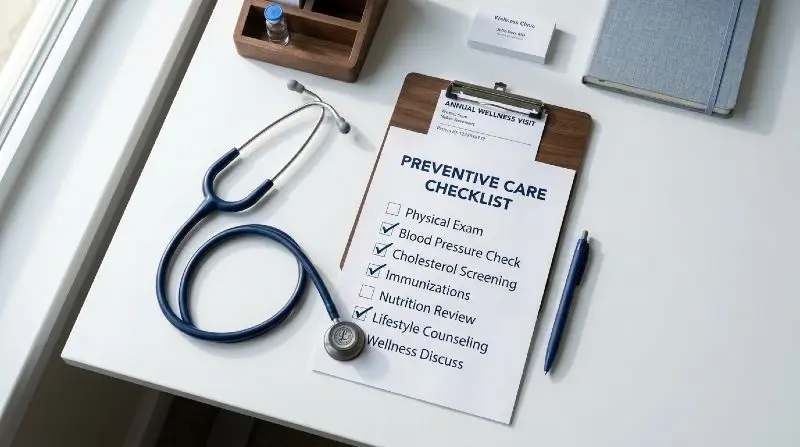
Most people walk out of their annual checkup without paying a single dollar. They assume the doctor just didn’t charge them. The real reason is simpler. Their health insurance covered it as preventive care.
Preventive care health insurance coverage is one of the most useful benefits built into U.S. health plans. Most insured Americans never fully use it. Many don’t even know what qualifies.
What Preventive Care Really Means
Preventive care covers health services designed to catch problems before they start. Think routine checkups. Think vaccinations. Think cancer screenings and blood pressure checks. These services don’t treat an existing illness. They stop one from developing or getting worse.
The Affordable Care Act made this coverage mandatory. Most health insurance plans sold through employers or the ACA marketplace must cover a defined list of preventive services at zero cost to the patient. No copay. No deductible. Nothing out of pocket. The only condition is that you see an in-network provider.
That’s a real benefit. Most people never use it fully because they don’t know which services qualify.
The Law Behind No-Cost Preventive Services
Congress built this requirement into the ACA for a practical reason. Preventive care reduces long-term healthcare costs. Catching colon cancer early costs far less than treating it at stage four.
The covered services come from three separate recommending bodies:
| Recommending Body | What They Cover |
|---|---|
| U.S. Preventive Services Task Force (USPSTF) | Screenings, counseling, preventive medications for adults |
| Advisory Committee on Immunization Practices (ACIP) | Recommended vaccines for all ages |
| Bright Futures / HRSA | Well-child visits and pediatric preventive care |
Plans must cover services rated “A” or “B” by USPSTF. You can browse the full list on the USPSTF website.
“People often assume preventive care is just the annual physical. The covered list actually includes cholesterol screenings, depression screening, tobacco cessation counseling and much more. It depends on age, sex and individual risk factors.”
— Based on clinical guidance published by HealthCare.gov
One important note: a federal court case called Braidwood Management v. Becerra challenged the authority of USPSTF to mandate coverage. This created some legal uncertainty around specific services. The situation is still developing. Check with your insurer about what your current plan actually covers.
What Gets Covered — What Doesn’t
This is where most people get tripped up. They schedule what feels like a preventive visit. Then a bill arrives.
Services Usually Covered at No Cost
- Annual wellness exam
- Blood pressure screening
- Cholesterol checks based on age and risk
- Colorectal cancer screening
- Mammograms and cervical cancer screenings
- Diabetes screening
- Routine childhood and adult vaccinations
- Depression screening
- Prenatal care visits
- Obesity counseling
The Billing Problem Nobody Warns You About
Here’s a realistic scenario. You go in for your annual wellness visit. Everything feels routine. Then you mention your knee has been hurting. Your doctor examines it. That knee exam gets billed as a diagnostic service — not preventive. Diagnostic services fall under regular cost-sharing rules. You get a bill.
This happens constantly. A patient walks in thinking the visit is free. They mention one symptom. Part of the visit shifts billing categories.
If you want to keep a visit fully preventive, save unrelated health concerns for a separate appointment. Or ask your doctor before the visit ends how they plan to code the billing.

Short-Term Plans Don’t Play by These Rules
Short-term health insurance plans are not required to follow ACA rules. They often skip preventive care coverage entirely or charge full cost for it.
If you rely on a short-term plan, read the fine print before assuming anything is free.
How Preventive Care Interacts With Your Deductible
This confuses a lot of people. Under the ACA, qualifying preventive services must be covered before your deductible is met.
Say your deductible is $4,000 and it’s January 2nd. You’ve paid nothing toward it yet. Your annual wellness visit should still cost you zero dollars.
That’s a concrete benefit most people overlook entirely.
One exception: grandfathered plans. These are plans that existed before the ACA and haven’t changed significantly since. They may not follow the no-cost preventive care requirement. Grandfathered plans are becoming rare. But they still exist. Check your plan documents if you’re unsure.
In-Network Providers Change Everything
The no-cost benefit disappears the moment you see an out-of-network provider. Understanding in-network vs. out-of-network coverage matters here just as much as it does for specialist visits.
Here’s a real scenario worth reading carefully.
Maria is 52 years old. She has a PPO plan through her employer. She schedules a mammogram at an imaging center she found nearby. The bill arrives. She owes $280.
The facility was out of network. Her plan covered the mammogram itself. But the facility charges got billed at out-of-network rates. She paid the difference.
One phone call to her insurer before the appointment would have fixed this entirely.
Plan Type Affects Your Experience — Not the Requirement
HMO plans, PPO plans and other ACA-compliant plan types all carry the same preventive care coverage requirement. The law doesn’t change based on plan type.
What changes is the practical experience. Some plans require referrals. Some limit which facilities count as in-network. Some have narrower provider directories.
Reading about HMO vs. PPO differences can help you understand how your access to preventive services works in real life — not just on paper.
Self-Employed? Same Rules Apply.
A lot of self-employed people assume their coverage works differently. It doesn’t. If you buy a qualifying plan through the ACA marketplace, you get the same preventive care benefits as someone covered through an employer.
Health insurance for self-employed individuals follows the same ACA framework. The benefits are identical on qualifying plans.
Children vs. Adults: Different Covered Services
Preventive coverage looks different depending on age. Well-child visits for children cover a broader range of services. Developmental screenings. Vision. Hearing. Immunizations. These visits tend to be covered more comprehensively than adult preventive care.

Adult coverage is more tailored. Age matters. Biological sex matters. Risk factors matter. A 45-year-old woman has different recommended screenings than a 45-year-old man. A 65-year-old has different recommendations than someone at 35.
The HealthCare.gov preventive care page breaks this down by category. Worth checking before your next appointment.
Mental Health Screening Is Preventive Care
Most people don’t realize this. Depression screening is included in covered preventive services under USPSTF recommendations. If your doctor performs a depression screening during a wellness visit it should cost you nothing.
Anxiety screening for adults under 65 was added to the USPSTF list in 2023. Whether your specific plan currently covers it at no cost depends on where the legal situation around USPSTF authority stands. Confirm with your insurer directly.
What To Do If You Get Billed Incorrectly
It happens. A provider uses the wrong billing code. A service gets categorized as diagnostic instead of preventive. A bill arrives that shouldn’t exist.
You have the right to appeal. Call your insurer first. Explain that the service should have been billed as preventive. Ask for a review. If the insurer doesn’t resolve it, contact your state insurance commissioner’s office. Every state has one. They handle consumer complaints against insurers.
Find your state’s regulator through the NAIC’s official directory.

Before Your Next Preventive Visit
- Confirm your provider is in-network before scheduling
- Tell the scheduler you’re coming for a preventive or wellness visit
- Avoid mentioning unrelated symptoms during the visit if you want it billed as fully preventive
- Call your insurer to confirm which specific services are covered at no cost
- Save your Explanation of Benefits after the visit to verify the billing
FAQs
No. Qualifying preventive services under ACA-compliant plans are covered before your deductible applies. You pay nothing for in-network covered preventive services on a qualifying plan.
People use the terms interchangeably. What actually matters is how the visit gets billed. If it’s coded as preventive care and the services fall within the covered list, no cost applies.
Yes. Flu shots, COVID-19 vaccines, shingles vaccines for older adults and childhood immunizations recommended by ACIP are covered preventive services on qualifying plans.
Grandfathered plans may be exempt from preventive care requirements. Ask your HR department or check your plan documents to find out.
Often yes. If a qualifying preventive service is delivered via telehealth with an in-network provider it should be covered at no cost. Plan-specific rules vary. Confirm with your insurer before the visit.
Yes. This happens when a visit shifts from preventive to diagnostic during the same appointment. Tell your doctor upfront why you’re there. Ask how additional concerns will be billed before raising them.
This article is for educational purposes only. It does not constitute financial, legal or medical advice. Health insurance rules and covered services vary by plan type and state. Verify your specific coverage directly with your insurer or a licensed insurance professional.
Preventive Care Coverage Checker
Find out which preventive services you may be eligible for at no cost
