



Most people buy homeowners insurance and hope they never have to use it. Then something happens — a burst pipe, a tree through the roof, a break-in — and suddenly you’re staring at damage you didn’t plan for, calling a number on the back of an insurance card, and genuinely unsure what comes next.
The home insurance claims process isn’t complicated once you see it laid out, but the first time you go through it, it can feel like speaking a language you half-learned. Here’s what actually happens, step by step, and what to watch out for along the way.
What Triggers a Claim in the First Place
Not every loss warrants a claim. That sounds counterintuitive — you pay premiums for a reason — but filing a claim for minor damage, especially damage close to your deductible amount, can affect your rates or even your policy renewal in some states.
Say your fence blows over in a windstorm and repairs cost $800. If your deductible is $1,000, filing a claim makes no financial sense. But if your roof takes significant hail damage estimated at $12,000? That’s exactly the situation insurance is designed for.
The decision to file should come after a quick assessment: Is the damage clearly covered under your policy? Does it exceed your deductible by a meaningful margin? Is it something you genuinely cannot absorb out of pocket? If yes to all three, it’s time to contact your insurer.
Step 1: Notify Your Insurance Company
Call your insurer as soon as reasonably possible after the loss. Most policies have a reporting requirement — vague language like “prompt notice” or a specific window like 30 to 60 days. Either way, don’t sit on it.
When you call, expect to provide:
- Your policy number
- Date and description of the loss
- Approximate extent of damage
- Whether there’s any ongoing threat (active leak, structural issue, etc.)
They’ll create a claim number for you. Write it down. Everything from here forward references that number.
“The first 24 hours after a loss set the tone for how smoothly a claim goes. Document everything before you touch anything, and report it quickly. Most delays I see stem from homeowners waiting, thinking they can handle it themselves first.”
— Licensed public adjuster with over 15 years of residential claims experience
Step 2: Document the Damage Thoroughly
Before anything gets cleaned up or repaired, photograph and video everything. Walk through the affected areas methodically. Open closets, move furniture if it was damaged, check adjacent rooms. Water, especially, travels — what looks like a ceiling stain might have spread into walls and subfloor.
Make a written list of damaged items, including:
- Description of each item
- Approximate age and original cost
- Current replacement cost estimate if you know it
If you have a home inventory — a pre-existing list of your belongings with photos and receipts — this is when it becomes invaluable. Most people don’t have one. If you don’t, do your best and pull together any purchase records, credit card statements, or photos you can find.
Understanding what your personal property coverage actually includes can help you figure out which items to document and prioritize when compiling your list.
Step 3: Prevent Further Damage (It’s Usually Required)
Your policy almost certainly has a duty to mitigate clause. That means you’re obligated to take reasonable steps to prevent additional damage after the initial loss.
If a window broke during a storm, you need to board it up. If there’s an active roof leak, you need to tarp it. You don’t have to hire the fanciest contractor — just reasonable, good-faith effort.
Keep receipts for anything you spend on emergency protection measures. Those costs are typically reimbursable under your policy. Just don’t make permanent repairs before the adjuster inspects — that’s where people run into problems.
Step 4: The Adjuster’s Inspection
Your insurer will assign a claims adjuster to your case. This is the person responsible for investigating the claim and determining what the company owes you.
There are two main types:
| Adjuster Type | Who They Work For | Notes |
|---|---|---|
| Staff Adjuster | Your insurance company | Salaried employee of the insurer |
| Independent Adjuster | Contracted by the insurer | Still represents insurer’s interests |
| Public Adjuster | You (the homeowner) | You hire and pay them separately |
Staff and independent adjusters both work on behalf of the insurance company. They’re not adversaries, but they’re not purely on your side either. A public adjuster, which you hire yourself, advocates specifically for your interests — often for a percentage of the settlement. For large or complex claims, some homeowners find that worth it.
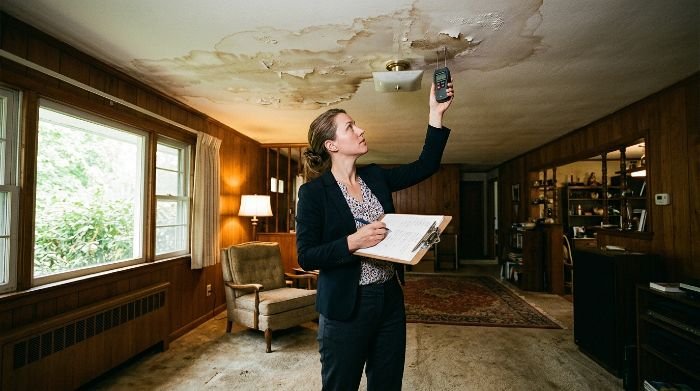
The adjuster will inspect the damage, review your documentation, check local labor and material costs, and produce a damage estimate using industry software (Xactimate is the most common). That estimate becomes the basis of the insurer’s offer.
What Happens If You Disagree With the Adjuster’s Estimate?
This comes up more than people expect. You can provide your own contractor estimates. If the gap between what the adjuster found and what a licensed contractor is quoting is significant, push back — in writing.
Most policies include an appraisal clause for exactly this situation. If you and the insurer can’t agree, each party appoints an independent appraiser, and those two agree on an umpire. The umpire’s decision is typically binding. It’s a formal dispute process, but it exists for a reason.
State insurance departments are also a resource. Each state has a commissioner’s office that handles complaints. The NAIC’s consumer resource page is a good starting point if you feel the process has gone sideways.
Step 5: The Coverage Determination
Once the adjuster files their report, your insurer makes a formal coverage determination. In plain terms: they decide what’s covered, what isn’t, and how much they’ll pay.
This determination is where policy language actually matters. Things like exclusions, sub-limits, and depreciation all come into play.
Actual cash value (ACV) vs. replacement cost value (RCV) is a big one here. ACV means the insurer deducts depreciation — that 10-year-old roof is worth less than a new one. RCV means they pay what it costs to actually replace it. Check your policy before you’re in this situation. If you’re unsure how your deductible interacts with either approach, this deductible breakdown explains it in plain terms.
Step 6: Payment and Settlement
If coverage is confirmed, you’ll receive a claim payment. For structural damage, many insurers issue payment in stages — an initial check based on ACV, then a supplemental payment once repairs are complete and you can demonstrate the actual replacement cost.
A few things people get caught off guard by:
- Mortgage company involvement: If you have a mortgage, your lender is likely listed on your policy as a loss payee. That means checks may be made out to both you and the lender. You’ll need to coordinate with your bank to get those funds released, which adds a step.
- Holdback amounts: On RCV policies, insurers sometimes hold back the depreciation amount until repairs are done.
- Separate living expenses: If your home is uninhabitable during repairs, your policy may cover additional living costs. This is called loss of use coverage — what it covers and how it works is worth understanding in advance. More on how loss of use works here.
Step 7: Repairs and Final Closure

Once funds are released, you hire contractors and begin repairs. Keep all invoices and completion documentation. If you have RCV coverage, you’ll typically submit proof of completed repairs to receive the withheld depreciation.
When repairs are finished and all payments are made, the insurer closes the claim. Make sure you get written confirmation that the claim is closed.
Common Mistakes That Slow Everything Down
A few patterns come up over and over in delayed or complicated claims:
- Waiting too long to report the loss
- Throwing away damaged items before the adjuster sees them
- Making permanent repairs before inspection
- Not reading the policy before assuming something is covered
- Ignoring deadlines in the claim correspondence
That last one is easy to overlook. Insurance companies send letters with response deadlines during the process. Missing them can limit your options later.
A Realistic Example
Picture this: A homeowner in Ohio comes home to find their basement flooded after a heavy rainstorm. They call their insurer, get a claim number, and photograph everything before touching it. The adjuster comes three days later and finds that the flooding entered through a window well — not from a sewer backup, not from a broken pipe.
Here’s where it gets uncomfortable. Standard homeowners policies typically exclude flood damage from rising surface water. If the homeowner doesn’t have a sewer backup endorsement and doesn’t have separate flood insurance through NFIP, that claim may be partially or fully denied. The exclusion isn’t a trick — it’s in the policy — but it’s devastating when you find out after the fact.
This is exactly why understanding what your policy actually covers before a loss matters more than most people realize.
How Long Does the Process Take?
It varies. A simple, undisputed claim — a small fire in a garage, a tree limb through a window — can wrap up in two to four weeks. Complex claims with significant structural damage, disagreements over estimates, or contractor delays can take months.
State laws often set timeframes that insurers must follow. Many states require acknowledgment of a claim within 10 to 15 days, and a decision within 30 to 45 days of receiving all documentation. The National Association of Insurance Commissioners publishes state-specific information if you want to check what applies where you live.
Quick Reference: Claims Timeline Overview
| Stage | Typical Timeframe |
|---|---|
| Initial report to insurer | As soon as possible after loss |
| Adjuster assigned | 1–5 business days |
| Adjuster inspection | Within 1–2 weeks (varies) |
| Coverage determination | 15–45 days after documentation complete |
| First payment issued | Days to weeks after determination |
| Final closure | After all repairs verified and paid |
Timelines vary significantly by state and claim complexity.
If Your Claim Gets Denied
It happens. And it doesn’t always mean the denial is the final word.
You have the right to request a written explanation for any denial. Review it carefully against your actual policy language. If you believe it’s wrong, you can:
- Submit a written appeal to the insurer with supporting documentation
- Invoke the appraisal or arbitration clause if applicable
- File a complaint with your state’s Department of Insurance
- Consult an insurance attorney (many take these cases on contingency)
The Insurance Information Institute offers plain-language guidance on policyholder rights if you find yourself in this position.
Disclaimer
This article is for general educational purposes only. Insurance laws, timelines, and coverage details vary significantly by state and by individual policy. Always review your specific policy documents and consult a licensed insurance professional for guidance on your situation.
FAQs
Most policies require “prompt” reporting, and some specify windows like 30 to 60 days. The sooner the better — delayed reporting can give insurers grounds to question or deny the claim.
Yes, and it’s a good idea. Getting your own estimates gives you a reference point if the adjuster’s number seems low. Just don’t make permanent repairs before the inspection.
It can. Even a single claim can lead to a rate increase at renewal, depending on your insurer and state. Some companies also limit new claims eligibility after recent filings. It’s one reason minor losses are sometimes better handled out of pocket.
Lenders have a process for this — typically requiring inspections at certain repair milestones before releasing funds in stages. Contact your loan servicer’s insurance department directly; they handle this regularly.
Not for every claim. For large losses — major fire damage, catastrophic weather events, complex structural claims — a public adjuster can sometimes recover significantly more than the initial offer. For smaller, straightforward claims, it may not be worth the fee, which is usually 10–20% of the settlement.
A denial means the insurer says the loss isn’t covered under your policy. A dispute usually means coverage is acknowledged but the payment amount is contested. The path forward differs — disputes often go through appraisal; denials typically require appeals or regulatory complaints.
Home Insurance Claims Readiness Tool
Answer 4 quick steps. Get a personalized action checklist for your claim — free, instant, no sign-up.
This helps us tailor your checklist to the exact type of damage you’re dealing with.
Please select a damage type to continue.
Please enter an estimated damage amount.
Please select when the loss occurred.
A few quick questions about your policy. Approximate answers are fine if you’re unsure.
Please enter your deductible amount.
Please select your coverage type.
Please select an option.
Check everything you’ve already completed. Don’t worry if you haven’t done much yet — that’s what the checklist is for.
Almost done. These last details shape the most relevant part of your action checklist.
Please select an option.
Please select an option.
